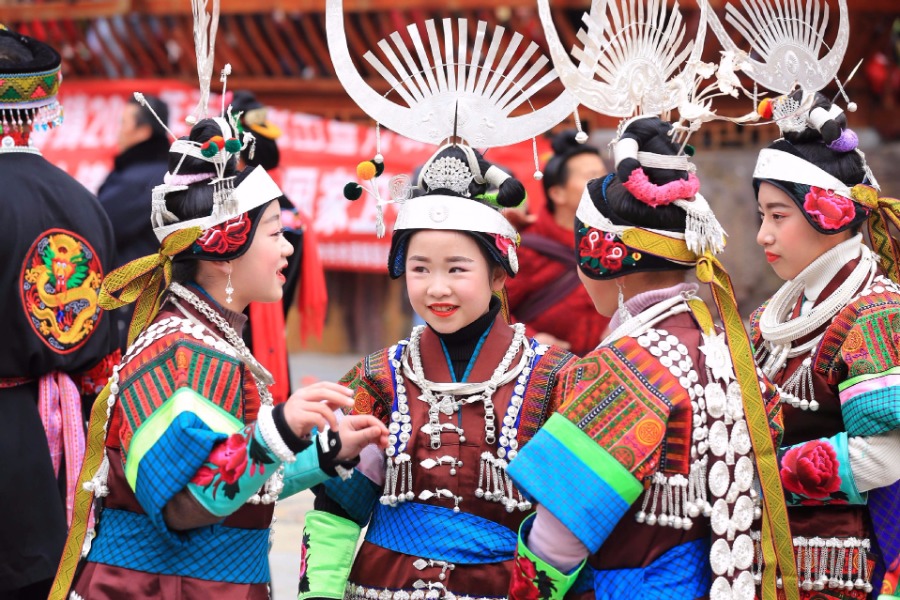
The Miao Lusheng Dance
Introduction
The lusheng dance of the Miao ethnic group, an integral part of local culture, is a traditional folk dance performed during significant events such as ancestor worship, festive celebrations and harvest festivals.
The dance has deep ceremonial roots, originating from ancient rituals intended to pray for bountiful harvests before planting and to give thanks to deities after the harvest. Popular across Miao communities, particularly in regions of Guizhou such as Leishan, Guanling, Rongjiang and Shuicheng, the lusheng dance has evolved into a vital expression of Miao social life.
History
The Miao lusheng dance traces its origins to ancient agricultural rituals performed by the Miao people. These rituals were central to their farming lifestyle, embodying prayers for abundant crops and gratitude for the blessings of their ancestors and deities. The dance developed as part of these ceremonies, reflecting both agricultural cycles and spiritual beliefs. Over time, it became more than just a ritual; it became a key component of social and celebratory events.
In modern times, the dance is performed during harvest seasons, festivals and during periods of agricultural rest, typically between rice harvest and the spring planting season.
Features
The lusheng dance is characterized by lively and vibrant performances, often set in an atmosphere of joy and festivity. The dance is accompanied by music played on the lusheng, a traditional reed instrument that gives the dance its name. The movements and melodies of the dance vary across regions, but common forms include ritual music, narrative songs, march-like tunes and dance sequences. The dance itself can take various forms: it may involve one person playing the lusheng while others perform the dance around them, or it may feature a group of performers simultaneously playing and dancing. In many instances, the lusheng player may either remain stationary or engage in light movements while surrounded by dancers, creating a visually striking spectacle.
The dance steps range from solemn and graceful to brisk and agile, reflecting the Miao people's diverse life experiences. The choreography is highly expressive, with dance movements conveying both respect and joy. Each regional variation of the dance has its own distinct style, with Leishan’s dance movements demonstrating natural elegance and harmony, while Guanling’s dance incorporates ancient agricultural and hunting themes.
Cultural Significance
The Miao lusheng dance holds profound cultural importance as a means of preserving the Miao people’s agricultural heritage, spirituality and community identity. Through its performance, the dance serves as a living testament to Miao beliefs and rituals. The variations in dance steps and music also embody local folklore, historical memories and the community’s relationship with nature. Each performance of the lusheng dance is an expression of the community's collective memory, connecting the Miao people to their ancestors and the environment they have lived in for centuries.
Moreover, the dance plays an important role in Miao festivals and celebrations, including the well-known Miao New Year and other local ceremonies, where it fosters unity and cultural pride. It is a vital form of social expression, helping to strengthen community bonds and affirm cultural identity.
Preservation
In recent years, the Miao lusheng dance has faced challenges in preserving its authenticity and continued practice. As the older generation of dancers and musicians fades, there is an increasing risk of this unique folk tradition being lost. Efforts are underway to document and pass on the dance to younger generations, but the survival of this cultural heritage remains in jeopardy. Various cultural preservation programs and local initiatives aim to safeguard the lusheng dance, but these efforts require greater attention and support to ensure its continuity.








